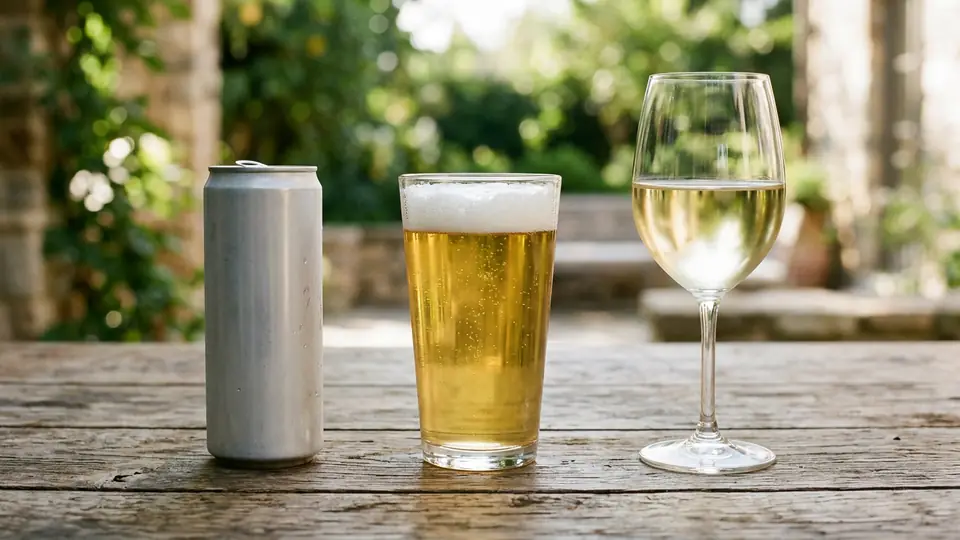
Short answer: it depends on serving size and how you drink it. Per-serving calories can be close enough that behavior becomes the real differentiator. If one option makes you pace slower, it may "win" in total nightly calories even if per-drink math is similar.
Head-to-head baseline
| Option | Typical serving | Approx calories |
|---|---|---|
| Hard seltzer | 12 oz can | ~90-140 |
| Light beer | 12 oz can/bottle | ~90-120 |
| Dry wine | 5 oz pour | ~110-130 |
Where comparisons go wrong
- Comparing 12 oz beer to 8-9 oz wine and pretending they are both one serving.
- Ignoring flavored seltzer sugar differences.
- Forgetting that pace and number of rounds matter more than tiny per-drink differences.
When each option makes sense
Hard seltzer
Useful for convenience and clear labeling. Great for home events or places where you can verify the can.
Light beer
Works well for people who naturally sip slower with beer than spirits. Pace control can lower total calories.
Wine
Good option if you keep pours honest. At restaurants and parties, large pours are the main risk.
Decision framework
- Pick one beverage family for the event.
- Estimate total planned servings before you start.
- Use hydration breaks to control pace.
- Avoid switching categories once late in the night.
Bottom line
There is no universal winner between seltzer, light beer, and wine. The best choice is the one that gives you predictable portions, slower pace, and better adherence to your total plan.
Method note: Calorie ranges vary by product and serving size.
Note: Educational content only, not medical advice.