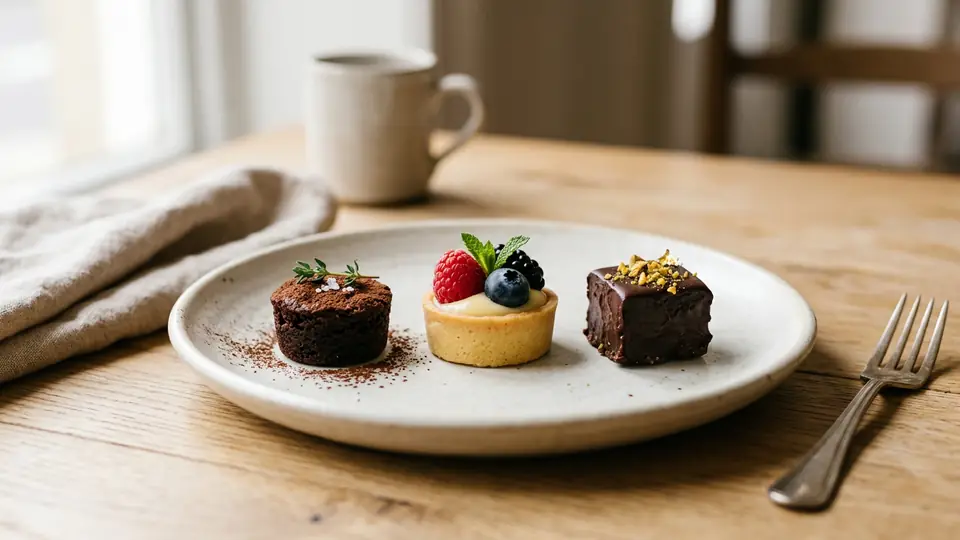
The right dessert under 150 calories should still feel like dessert. If it tastes like punishment, adherence dies quickly. This guide focuses on satisfaction, not just numbers.
What makes a low-calorie dessert actually work
- Texture: creamy, crunchy, or cold can improve satisfaction.
- Portion certainty: pre-portioned options reduce overshoot.
- Context: desserts work better after protein-rich meals.
Dessert options table
| Dessert idea | Calorie target | Why it works |
|---|---|---|
| Greek yogurt + berries + sweetener | ~120-150 | Creamy + volume + protein |
| Mini ice cream bar | ~90-140 | Strong portion control |
| Pudding cup + fruit | ~80-140 | Sweetness with extra fullness |
| Cocoa protein mousse | ~130-150 | Dessert feel + satiety |
How to stop dessert from becoming a binge trigger
Use planned boundaries: one serving, plated, eaten at a table, ideally at a fixed time. The biggest risk is unstructured container eating while distracted. Another risk is dessert after a very low-protein day; hunger and cravings amplify each other.
Weekly dessert system
- Pick your top three desserts under 150 calories.
- Stock only those for seven days.
- Set a default timing (for example, post-dinner).
- Audit which option gives the highest satisfaction per calorie.
Bottom line
Low-calorie desserts work when they are enjoyable, pre-portioned, and embedded into a routine. You do not need to remove desserts; you need to structure them.
Method note: Calorie values vary by brand and serving size.
Note: Educational content only, not medical advice.