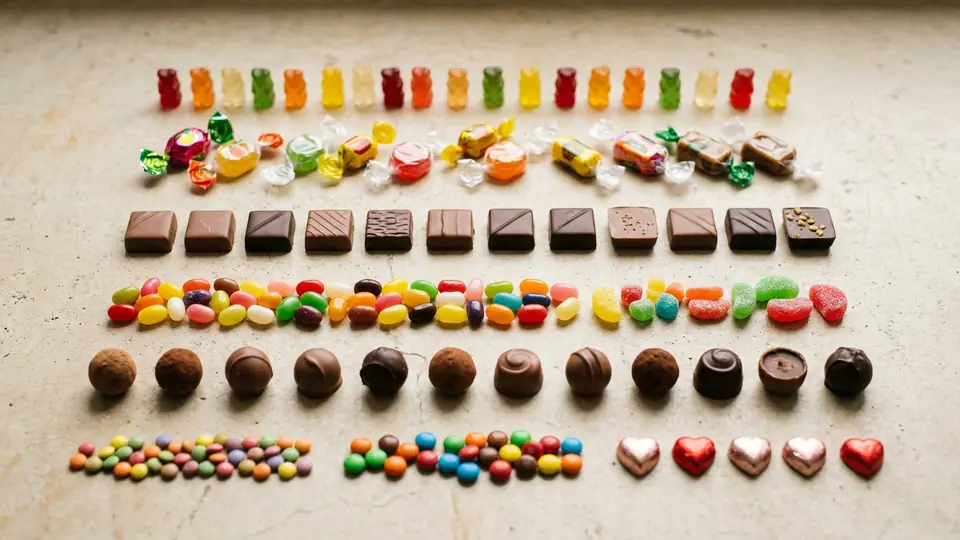
Almost all sweets can fit a diet if portions are controlled. The better question is: which sweets can you eat without losing control? Adherence, not ideology, decides results.
How to rank sweets for fat-loss compatibility
- Portion clarity: Is one serving obvious and easy to stop at?
- Satiety effect: Does it reduce cravings or amplify them?
- Availability friction: Is it easy to avoid accidental overeating?
Practical ranking table
| Sweet category | Typical serving | Approx calories |
|---|---|---|
| Hard candy | 3-5 pieces | ~45-90 |
| Mini chocolate | 1 mini bar | ~70-120 |
| Gummy candy | 30 g | ~100-130 |
| Dessert-style bars | 1 bar | ~150-260 |
Best strategy for cravings
Use planned sweetness, not emergency sweetness. A pre-portioned 100-180 calorie sweet at a predictable time is usually better than resisting all day then overeating at night.
Pair sweets with protein or volume foods when possible. Examples: mini chocolate after a high-protein dinner, or a small candy portion with tea and fruit.
Common mistakes
- Buying large bags and trusting discipline in the moment.
- Using sweets as meal replacement while underfed.
- Calling sugar-free versions "free calories."
Simple weekly setup
- Set a weekly sweet budget in calories or servings.
- Pre-portion all sweets into single servings.
- Define when sweets are allowed (for example, after dinner only).
- Track adherence for one week and refine.
Bottom line
You can eat sweets on a diet. Choose options with clear portions, run a predictable schedule, and design your environment to reduce accidental overeating.
Method note: Calories are practical ranges based on common serving sizes and labels.
Note: Educational content only, not medical advice.