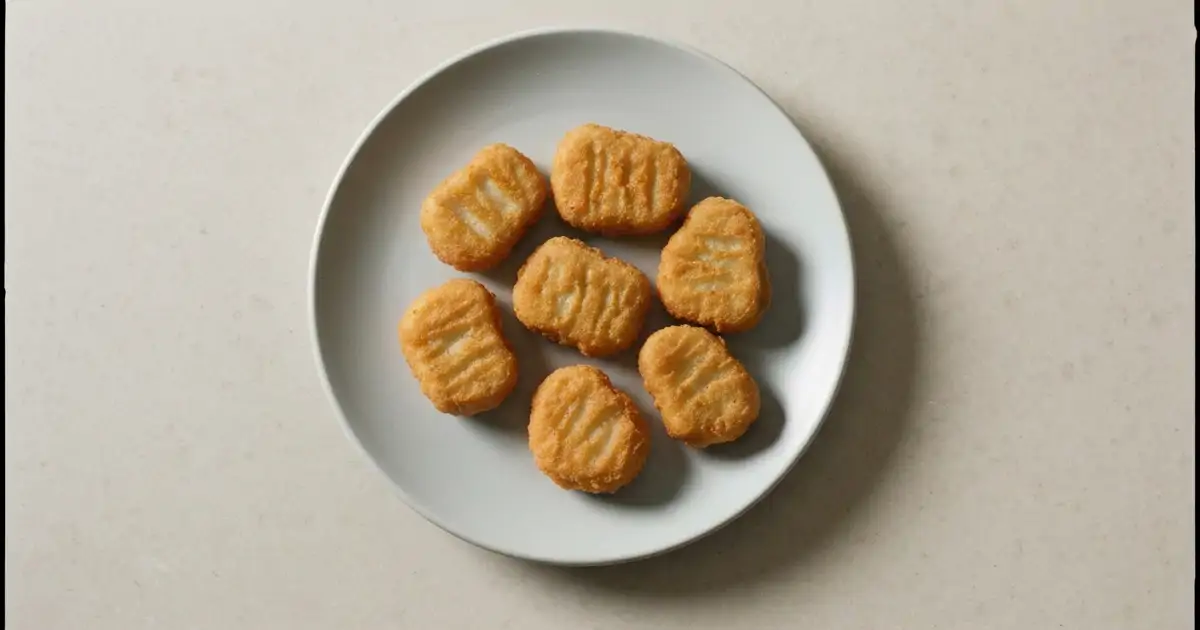

I walked into Chick-fil-A and Panera with a notebook, ready to see if their "lighter" nuggets lived up to the hype. The marketing copy promised fewer calories and less sodium, but my label-scanner didn't buy the story. Here's what the numbers actually say, and why my husband Jake still prefers the smaller packs for portion control.
The "Healthier" Label: A Marketing Illusion
You see it everywhere: "Grilled!" "Lighter!" "Clean Ingredients!" Fast-food chains know we want to feel good about our choices, so they slap a "healthier" label on just about anything. But more often than not, this is less about genuinely offering a nutritionally superior product and more about clever positioning. It's label laundering, plain and simple.
Chick-fil-A: Grilled vs. Original
Chick-fil-A is a prime example. They offer both their classic fried nuggets and "Grilled Nuggets." On paper, the grilled option looks like a clear winner. An 8-count of their fried Nuggets clocks in at 270 calories, 13g fat, 2.5g saturated fat, a whopping 940mg of sodium, and 28g protein. Not terrible for protein, but that sodium and fat add up fast.
Now, switch to the 8-count Grilled Nuggets: 130 calories, 3g fat, 1g saturated fat, 440mg sodium, and 25g protein. That's a significant drop in calories, fat, and sodium. So, are they "healthier"? Absolutely. If you stop there.
But who stops there? Most people, Jake included, grab a sauce. A single packet of Chick-fil-A's Honey Mustard sauce contains approximately 48 calories and 11.2g of carbs. Multiply that by two or three packets -- which is easy to do -- and you've added 100-150 calories and 20-30g of carbs to your "healthy" meal. For context, 100g of Chick-fil-A honey mustard sauce alone is 171 kcal, 0 g protein, and 40 g carbs. It's essentially liquid sugar and fat. So, while the chicken itself is lighter, the complete meal can easily push you back into "regular fried nugget" territory.
Panera: Where Are the "Healthier Nuggets"?
My trip to Panera for "healthier nuggets" was short-lived. Panera, despite its carefully cultivated image as a purveyor of wholesome, "clean" food, doesn't actually sell chicken nuggets. This is the first myth busted right there. They rely on their general reputation to imply a healthier choice across the board, even for products they don't carry.
Instead, Panera offers various chicken options in sandwiches, salads, and soups. Many of these are far from "light." Take their popular Broccoli Cheddar Soup. Per 100g, it's 99 kcal, 4g protein, and 7g carbs. Sounds okay, right? But a large bowl is over 500 calories, with 35g of fat and a staggering 1450mg of sodium. That's more sodium than the fried Chick-fil-A nuggets! It's another classic example of how "healthy" branding can mislead. You think you're making a virtuous choice, but you're getting a sodium bomb that could rival a typical fast-food combo.

Ingredient Audit: What's Really in Your "Chicken"?
The term "chicken nugget" can be a bit of a misnomer. While many claim "100% white meat chicken," that often refers to the type of meat, not its purity or processing. Beyond the chicken, you're usually looking at a laundry list of binders, fillers, and breading components designed for texture, flavor, and shelf stability. Think cornstarch, various flours, and isolated soy protein. These add calories, unhealthy fats, and often a surprising amount of sugar.
Even "grilled" chicken from fast-food chains can be injected with sodium solutions and flavor enhancers. The protein content might be decent, but the overall package can still be far from ideal.
For a clearer picture, consider store-bought options that are transparent about their ingredients. Take L'Atelier Pere Dodu 100% filet nuggets, for example. These are a processed, breaded chicken product you can cook at home, but they generally aim for a higher quality ingredient profile. Per 100g, they contain 228 kcal, 16g protein, and 10g fat. Compare this to the 100g equivalent of a typical fast-food fried nugget (which can easily hit 300 kcal, 15-20g protein, and 18-20g fat, depending on the brand and breading). The Pere Dodu isn't a health food, but it often offers a better macronutrient ratio and a simpler ingredient list than many fast-food versions.
The point isn't to demonize all processed chicken, but to highlight that even when ingredients are listed, the full nutritional impact of processing and preparation, especially at fast-food joints, is often obscured by marketing.
Portion Control and Real-World Eating
This is where the "healthier" facade truly crumbles. Let's say you genuinely choose the 8-count Chick-fil-A Grilled Nuggets with no sauce. Good job. But how many people stick to that?
Jake, bless his heart, can demolish an entire bag of chips in one sitting if I let him. He's also the type to see "grilled" and think it's a free pass to order a 12-count, a large fry, and two sauces. My strategy is always about portion control, which is why I prefer the smaller packs of anything for myself.
Even if the "healthier" option has fewer calories per nugget, ordering a larger quantity or adding calorie-dense sides and sauces instantly erases any benefit. A 30-count of Chick-fil-A Grilled Nuggets, for instance, is 570 calories and 1650mg of sodium. At that point, the "lighter" aspect is irrelevant; it's just a large amount of chicken with a significant sodium load.
Taste Test Meets Data
Frankly, most people prefer the taste of fried nuggets. That crispy, salty, fatty bite is hard to beat. The "healthier" grilled versions, while often tasty in their own right, don't always hit that same satisfaction button. This often leads to a phenomenon where people overcompensate for the perceived lack of flavor by drowning them in even more sauce, or ordering a larger portion to feel full.
For me, taste is a factor, but the data is the ultimate arbiter. If the "healthier" option doesn't provide a significant nutritional advantage after accounting for all real-world variables, then the taste difference becomes a moot point. It's not about denying enjoyment, but about being brutally honest about what you're actually putting into your body.
Bottom Line: The "Healthier" Label is Busted
My label-scanner's initial skepticism was well-founded. The "healthier chicken nuggets" myth is largely just that - a myth. While some chains offer slightly better grilled options (like Chick-fil-A's), they are still often high in sodium, and the benefits are easily negated by sauces and larger portions. Other chains, like Panera, don't even offer a comparable product but rely on a general "healthy" halo.
The difference between a "healthier" fast-food nugget and its regular counterpart is often marginal in the context of a typical meal. It's more about being "less bad" than genuinely "good." They are not a shortcut to healthy eating.
Next time you crave nuggets, grab the plain chicken breast, slice it yourself, and remember the label-laundering circus is over.