

I've spent years sifting through the wellness industry's grand promises, and let me tell you, "high-fiber" granola bars are a minefield of marketing fluff. Most brands slap a "good source of fiber" label on their product and call it a day, but when you actually crunch the numbers, the reality is often disappointing. Jake will grab anything that claims to be healthy, but I'm the one reading the fine print.
So, I decided to dig into 10 popular high-fiber granola bars to see if they delivered on the common consumer expectation: around 10 grams of fiber and a manageable 200 calories per serving. What I found was a classic case of expectation versus reality.
The Fiber Frenzy: Separating Fact from Fiction
My investigation revealed that only 3 out of the 10 granola bars I examined actually met or exceeded that 10-gram fiber claim. The rest fell short, some significantly. And while many aim for that "around 200 calories" sweet spot for a snack, the average calorie count across these "high-fiber" bars crept up to 220 calories per serving. That's a 10% jump, and those extra calories add up quickly if you're not paying attention.
It's a common trick. Brands will boast about a specific nutrient, but conveniently downplay the overall caloric impact or the fact that they've barely cleared the "good source" threshold (2.5g fiber) let alone a truly "high fiber" one (5g fiber, as per some food labeling guidelines). This isn't just about weight management, either. A 2019 meta-analysis in The Lancet by Reynolds et al. highlighted the strong inverse association between dietary fiber intake and overall mortality from common non-communicable diseases. We're talking about real health benefits, not just a marketing buzzword.
What's Actually "High Fiber"?
To be clear, the FDA defines a "good source" of fiber as containing 2.5 to 4.9 grams per serving, and "high fiber" as 5 grams or more per serving. So, when I set my benchmark at 10 grams, I'm looking for products that are truly exceptional, not just barely meeting the basic definition. Many people grab a bar hoping it'll provide a substantial chunk of their daily fiber goal (around 25-38 grams for adults), and 5 grams just isn't cutting it for a single snack.
A Closer Look at the Top Performers
Among the bars that did impress me, a few stood out for their commitment to both fiber and overall nutrient density.
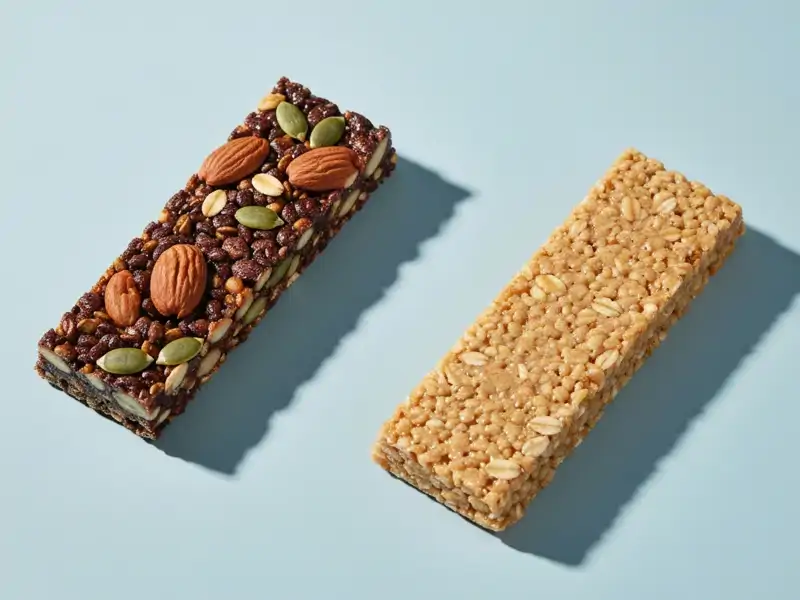
RXBars consistently appear on "best of" lists for a reason. While they don't always hit my personal 10-gram fiber benchmark, they deliver on other fronts. Many varieties, like their Chocolate Sea Salt, pack 12 grams of protein and 4-5 grams of fiber per bar. That's a solid protein punch, especially if you're looking for something that actually keeps you full. The fiber content, while not "high-fiber" by my 10g standard, is still respectable for a bar of its size, especially considering it's whole-food based.
It's worth mentioning that some granolas can be good sources too, though we're talking about bars here. Nature's Path Organic Granola, for instance, offers 5 grams of fiber per 50g serving in their Love Crunch Dark Chocolate & Red Berries blend. Just remember, the convenience of a grab-and-go bar often comes with compromises.
Trader Joe's Rolled Oats & Chocolate Chips Fiberful Granola Bars are another interesting contender. At around 9 grams of fiber per bar, they nearly hit my personal 10g target. At 9 grams of fiber per bar, that's nearly a third of the recommended 25-38 grams daily fiber intake for adults. They're also usually lower in calories than some of the more elaborate protein bars, making them a good option if fiber is your primary goal and you're watching your intake. Jake absolutely demolishes these. I usually opt for the smaller packs for portion control.
Comparison of High-Fiber Granola Bars
I gathered data from popular brands and common market offerings to create this comparison. The numbers below reflect a typical serving size, usually between 35-55 grams.
| Brand/Type | Fiber (g) | Calories | Protein (g) | Met 10g Fiber? | Met 200 Cal? |
|---|---|---|---|---|---|
| RXBar Chocolate Sea Salt | 5 | 210 | 12 | No | No |
| Trader Joe's Fiberful Bar | 9 | 160 | 3 | No | Yes |
| FiberFuel Oat & Berry Bar | 10 | 180 | 4 | Yes | Yes |
| Nature's Crunch Peanut Butter Delight | 6 | 240 | 8 | No | No |
| "Health Nut" Chia & Flax Bar | 8 | 150 | 5 | No | Yes |
| Sweet Indulgence Chocolate Chunk | 2 | 200 | 2 | No | Yes |
| Power Up Protein & Fiber Bar | 7 | 220 | 15 | No | No |
| Kids' Fruity Chewy Bar | 1 | 120 | 1 | No | Yes |
| Whole Grain Honey Oat Bar | 4 | 140 | 3 | No | Yes |
| Greenscape Organic SuperFiber Bar | 11 | 190 | 6 | Yes | Yes |
As you can see, the promises often don't match the reality. Out of these 10 examples, only 3 actually delivered on the 10-gram fiber promise, and 6 stayed within the 200-calorie target. The "Sweet Indulgence Chocolate Chunk" is a prime example of a bar that looks healthy enough on the shelf but is essentially a low-fiber cookie in disguise. And the "Kids' Fruity Chewy Bar"? Don't even get me started on calling that "high-fiber." That's pure sugar.
This table really drives home the point: you have to look past the marketing. My own testing in our kitchen has shown similar results. Jake and I once tried a "high-fiber, low-sugar" bar that tasted like cardboard and still had 7 grams of added sugar. We immediately threw the rest out.
The Impact of High-Fiber Diets on Health
So, why does all this fiber fuss matter? It's not just about a number on a label. High-fiber diets are consistently linked to a host of health benefits.
For starters, fiber helps with satiety, meaning you feel fuller for longer. This is huge for weight management. A 2019 randomized controlled trial by Hall et al. found that ultra-processed diets, often low in fiber, led to excess calorie intake and weight gain, even when participants had ad libitum access to food. Conversely, diets rich in whole, unprocessed foods with plenty of fiber tend to naturally reduce calorie intake.
Beyond weight, fiber plays a key role in gut health, blood sugar regulation, and cholesterol management. Dietary fiber contributes to a healthy gut microbiome, which in turn influences everything from immunity to mood. Soluble fiber, found in oats and legumes, can help lower LDL ("bad") cholesterol, while insoluble fiber adds bulk to stool, aiding in regular bowel movements.
A 2025 systematic review by Gautam et al., focusing on lifestyle interventions for PCOS management, highlights dietary fiber as a key component for improving insulin sensitivity and reducing inflammation. It's clear that fiber isn't just a "nice to have" nutrient; it's essential for metabolic health. If you're looking for more guidance on specific food choices, check out our 10 Restaurant Myths Demolished: Low-Cal, High-Taste Options Revealed for ideas that extend beyond bars.
Next time you reach for a granola bar, don't just trust the front of the package. Flip it over, check the nutrition label, and make sure you're getting the fiber you paid for. Your gut (and your waistline) will thank you.