

Think again if you believe oatmeal is always the healthier choice for breakfast. The numbers may surprise you. For years, the health halo around oats has been so bright it blinds people to what's actually in their bowl. Meanwhile, granola gets a bad rap, often unfairly lumped into the "unhealthy" camp. It's time to pull back the curtain and look at the cold, hard facts. You might find that your "healthy" flavored oatmeal is just as calorie-dense, carb-loaded, and surprisingly low in fiber, at 8 grams per 100 grams, as some of its granola counterparts.
I've spent years comparing labels, much to Jake's amusement sometimes. He's more of a "taste first, worry later" kind of guy. But I'm here to tell you, if you're not scrutinizing those nutrition facts panels, you're missing half the story. Just like we busted myths about 10 Restaurant Myths Demolished: Low-Cal, High-Taste Options Revealed, we're about to do the same for your morning meal.
The Calorie Confusion
Calories are usually the first thing people look at. Too many, and you won't hit your goals. Common wisdom says granola is a calorie bomb, while oats are light and virtuous. Not so fast. While a handful of granola can pack a punch, many popular oat-based breakfast options aren't far behind. We're talking about products specifically marketed as "oat breakfast" or "oat mixes," not plain rolled oats.
For instance, Bjorg's Avoine chocolat, a flavored oat option, clocks in at 454 calories per 100 grams. Compare that to LU's Granola L'Original, which comes in at 488 calories per 100 grams. Yes, the granola is higher, but the difference is only 34 calories. That's hardly a chasm, especially when you consider typical serving sizes. If you're pouring a generous bowl of that chocolate oat mix, you're easily hitting 500-600 calories before you even think about milk or toppings.
People often over-portion "healthy" foods, believing they have a free pass. That Avoine chocolat might feel like a wholesome start to your day, but it's packing almost as much energy as a modest serving of granola. Marketing can be misleading, so don't assume a product is healthy just because it says "oat."
Sugar Shock
This is where things get particularly messy. The nutrition data I'm using provides total carbohydrates, not explicit "added sugar" content. This is a common tactic by food manufacturers - they list total carbohydrates, which includes sugars, starches, and fiber. But what we often don't see upfront is how much of that carbohydrate count comes from added sugars, even in seemingly "healthy" oat options.
Many people assume "oats" automatically means low sugar. But when you pick up a pre-mixed, flavored oat product, you're often getting a significant dose of sweeteners. Take Bjorg's Avoine complète, for example. It contains 64 grams of carbohydrates per 100 grams. Granola Chocolat from Bjorg has 62 grams of carbohydrates per 100 grams. That's practically identical.

The problem isn't always the inherent sugar in the grain itself, but what manufacturers add to make it palatable for the masses. Chocolate, honey, syrups, dried fruits - these all contribute to that carbohydrate number. Plain, unadulterated oats are naturally low in sugar. But the moment you add "chocolate" or "fruit and nut blend" to the name, you need to be very wary. People often say, "I thought oatmeal was good for me!" It is, in its purest form. But a pre-packaged, sweetened oat blend can quickly become a sugar delivery system disguised as breakfast.
A 2021 meta-analysis by Chiavaroli et al. published in BMJ highlighted the importance of low glycaemic index dietary patterns for glycaemic control and cardiometabolic risk factors [1]. Products with high added sugars, regardless of whether they're oat or granola, can spike blood sugar, negating many perceived health benefits.
Fiber Face-Off
Fiber promotes satiety, aids digestion, and can help regulate blood sugar. When comparing oats and granola, people usually assume oats win hands-down on fiber. But that's not always true.
Plain oats are indeed excellent sources of fiber. Bjorg's Flocons d'avoine (rolled oats) boasts an impressive 11 grams of fiber per 100 grams. Crownfield's Copos de Avena Suaves (smooth oat flakes) delivers 10 grams of fiber per 100 grams. These are fantastic numbers and exactly why whole, unsweetened oats are a dietary staple.
But what about the flavored oat options? Bjorg's Avoine chocolat, for instance, only has 8 grams of fiber per 100 grams. And how does that compare to granola? Bjorg's Granola Chocolat also has 8 grams of fiber per 100 grams. So, in this specific comparison of chocolate-flavored products, they're identical on fiber. LU's Granola L'Original is lower, with just 4 grams of fiber per 100 grams.
This shows that fiber content isn't exclusive to oats. Some granolas, particularly those rich in nuts, seeds, and whole grains, can offer a decent fiber punch. It's the highly processed, sugary granolas you need to watch out for, just as you need to watch out for the highly processed, sugary oat blends. My previous deep dive into Fiber Frenzy: Do High-Fiber Granola Bars Deliver or Deceive? Morgan Harlan Compares Brands, Crunches Numbers showed similar discrepancies. The "high-fiber" claim often applies to one specific type of product, not the entire category.
Comparison Time
To really drive this point home, let's look at the numbers side-by-side. This is the kind of analysis Jake usually rolls his eyes at, but it's essential for making informed choices. All values are per 100 grams. Remember, "Carbohydrates" includes starches, sugars, and fiber. For the highly processed, sweetened products, a significant portion of those carbs will be from added sugars.
| Product Name | Type | Calories (kcal/100g) | Protein (g/100g) | Fat (g/100g) | Carbohydrates (g/100g) | Fiber (g/100g) |
|---|---|---|---|---|---|---|
| Avoine chocolat, Bjorg | Oat | 454 | 8 | 18 | 61 | 8 |
| Avoine complète, Bjorg | Oat | 442 | 9 | 15 | 64 | 8 |
| Granola L'Original, LU | Granola | 488 | 6 | 23 | 62 | 4 |
| Granola Chocolat, Bjorg | Granola | 420 | 10 | 13 | 62 | 8 |
| Flocons d'avoine, Bjorg | Oat (Plain) | 363 | 11 | 7 | 58 | 11 |
| Copos de Avena Suaves, Crownfield | Oat (Plain) | 372 | 14 | 7 | 59 | 10 |
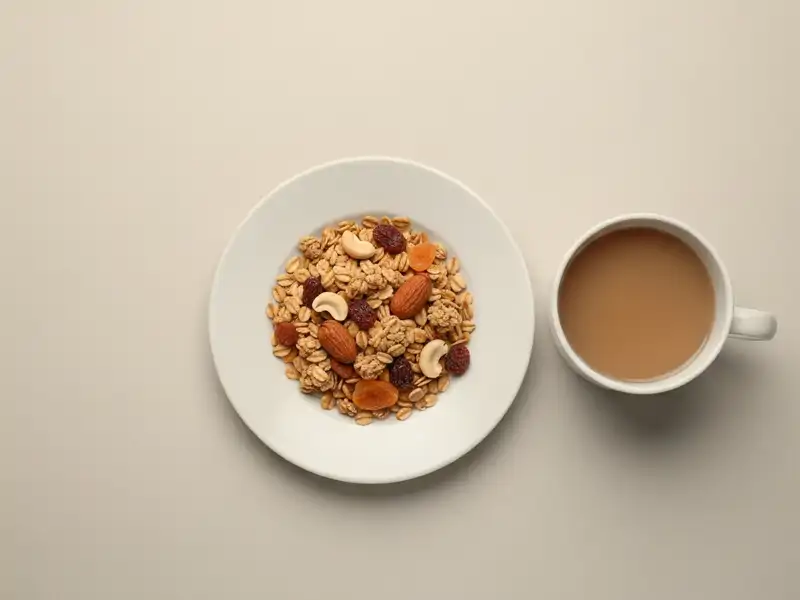
What does this table tell us?
- Calories: Granola L'Original is the highest, but Avoine chocolat isn't far behind. The plain oats (Flocons d'avoine, Copos de Avena Suaves) are significantly lower.
- Protein: Plain oats are typically higher in protein, with Copos de Avena Suaves leading at 14 grams. The flavored products hover around 6-10 grams, with Bjorg's Granola Chocolat offering a decent 10 grams.
- Fat: Granola L'Original has the highest fat content (23g), which isn't surprising given its higher calorie count. Plain oats have significantly less fat, which is often a good thing when you're adding your own healthy fats (like nuts or seeds).
- Carbohydrates: Avoine complète actually has the highest carbohydrate count. Again, the flavored oat options are very similar to the flavored granolas. Plain oats are lower.
- Fiber: Plain oats are the clear winners here. However, the flavored oat options (Avoine chocolat, Avoine complète) have the same 8g fiber as Bjorg's Granola Chocolat. Granola L'Original is the lowest.
This data directly challenges the idea that "oats are always better than granola." It simply isn't true when you compare processed, flavored versions of each. The devil is always in the details, and those details are on the nutrition label. Just like The Great Greek Yogurt Hoax: Morgan Harlan Tests Labels, Uncovers Surprising Truths, what you think you're getting often isn't what's actually in the package.
Making Your Choice Count
Neither oats nor granola is inherently healthier than the other across the board. It depends on the specific product you choose and how much you eat. If you grab a highly processed, sugar-laden oat blend, you might be making a less optimal choice than a carefully selected, lower-sugar, higher-fiber granola.
Studies consistently point to the benefits of dietary fiber and whole grains. Reynolds et al., in a 2020 systematic review and meta-analysis published in PLoS Medicine, confirmed the positive impact of dietary fiber and whole grains on diabetes management [3]. These benefits come from the fiber and complex carbohydrates, not the added sugars often found in processed breakfast options. Neufingerl & Eilander's 2021 review in Nutrients focused on plant-based diets, reinforcing the overall importance of nutrient-dense whole foods, which plain oats certainly are [2].
My advice? Don't fall for the marketing hype. An "oat breakfast" doesn't automatically mean health. Plain, unflavored, rolled oats are your best bet for maximizing fiber and minimizing added sugars. Then, you can control what you add. A dash of cinnamon, a handful of fresh berries, a sprinkle of nuts - these are genuinely healthy additions.
If you enjoy granola, don't write it off entirely. Look for brands with minimal added sugar, a short ingredient list, and a high fiber content (ideally 4g or more per serving). Avoid the varieties with candy pieces, excessive dried fruit, or a long list of syrups. Portion control is also key; Jake will demolish an entire bag of some granolas, but I prefer the smaller packs for portion control.
So the next time you are at the breakfast aisle, take a closer look at the labels and make an informed choice based on your dietary needs, not just a health halo.