
I just spent 48 hours eating at popular restaurants with my husband Jake, and the results were shocking: choosing smaller portions can save you up to 900 calories per meal. It's not a secret diet trick or a complicated meal prep strategy. It's as simple as reading the menu and making an informed choice.
The Portion Size Problem
Restaurant portions have ballooned over the last few decades. What used to be a reasonable serving for one person now often resembles enough food for two, sometimes even three. This isn't just an observation; it's a documented trend. Theglp1source.com reported in January 2026 that "restaurant portions have grown significantly, making it harder to recognize what feels 'normal.'" Your perception of a "normal" meal has been skewed by restaurants wanting you to feel like you're getting value.
This isn't about shaming anyone for enjoying a meal out. It's about being aware of the environment we're eating in. Oversized portions are directly linked to overeating. Kaiser Permanente's Department of Research & Evaluation highlighted this issue, noting that "restaurants in the United States are known for generous portions, often serving far more food than most adults need in a single meal. Those oversized portions have long been linked to overeating." It's a subtle trap, but a trap nonetheless. You pay a little more, you get a lot more, and your body pays the price.
Jake, bless his heart, almost always defaults to the "large" option. "It's only a dollar more, Morgan!" he'll say, eyeing the extra fries. And he's right about the dollar. But the nutritional cost is far greater. Our 48-hour experiment was as much about proving a point to him as it was to you. I wanted to quantify exactly how much of a difference these choices make.
Case Study: Brunch at a Popular Restaurant
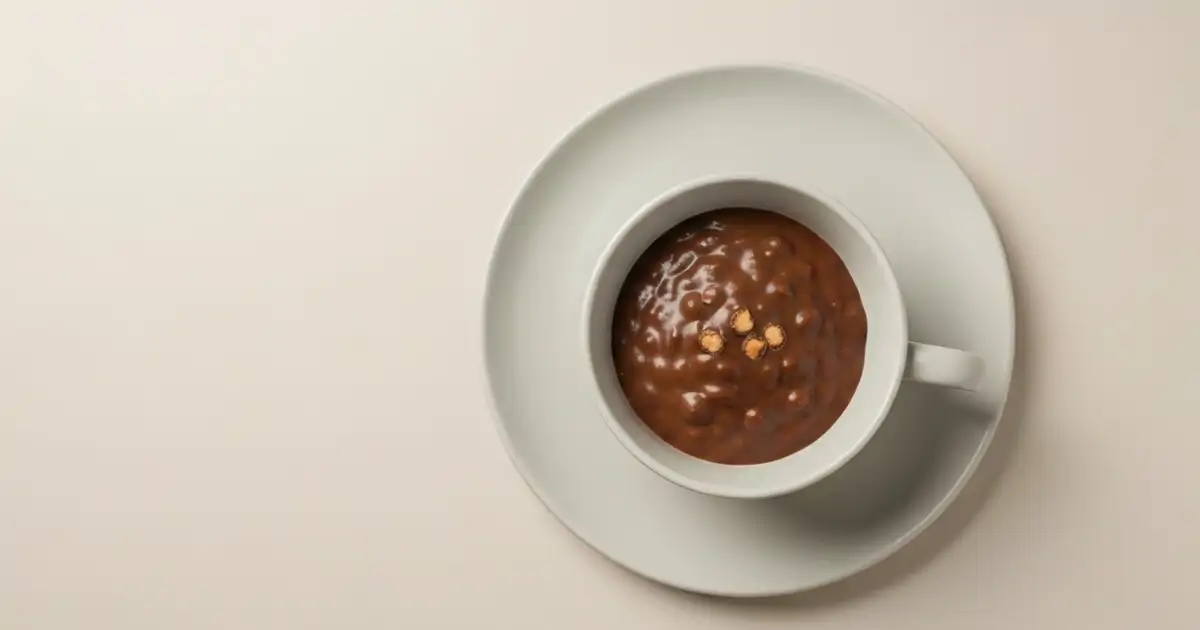
Our 48-hour challenge started with brunch. I'm a fan of a good brunch, but I'm also a fan of not feeling like I need a nap before noon. We headed to a spot known for its indulgent, Instagram-worthy dishes. Jake immediately gravitated towards something called the "Brunch Choc Chip," a decadent-sounding pastry. I, ever the pragmatist, was looking for the least caloric option that still felt like a treat.
Jake's Cadbury Brunch Choc Chip, according to its nutrition data, packed 428 calories, 6g of protein, 16g of fat, 65g of carbs, and 4g of fiber per 100g. If his serving was a standard 150g (which it felt like, honestly), that's already 642 calories, 9g of protein, 24g of fat, 97.5g of carbs, and 6g of fiber before coffee, cream, or any other additions. It was a dense, sugary brick. Delicious, he assured me, but a calorie bomb.
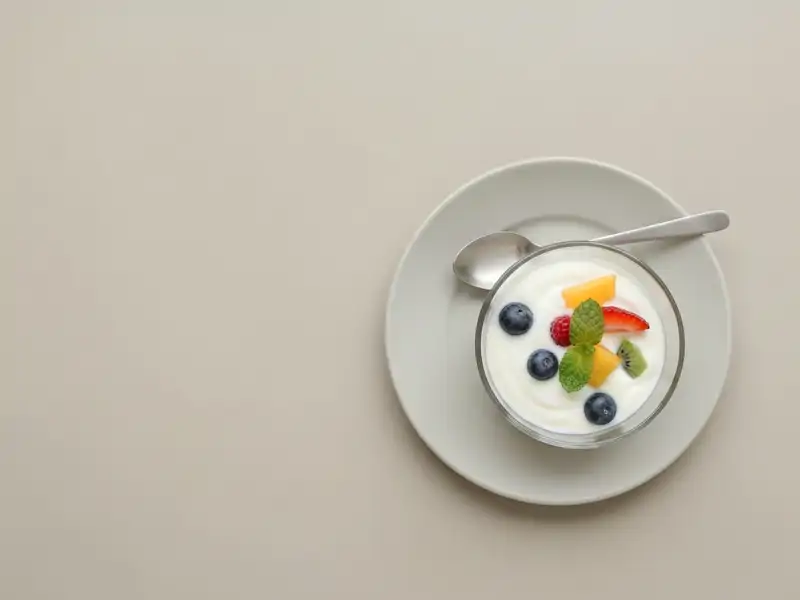
I opted for a simpler "Brunch" dish, essentially a smaller fruit and yogurt parfait with a minimal granola topping. It came in at 189 calories, 4g of protein, 20g of fat, 5g of carbs, and 0g of fiber per 100g. My estimated 200g serving was a more manageable 378 calories, 8g of protein, 40g of fat, 10g of carbs, and 0g of fiber. Still a treat, still enjoyable, but a significant difference.
That single brunch choice set us off with a 264-calorie gap right at the start of the day. This was before we even considered lunch or dinner. It's easy to dismiss these differences as "just one meal," but they add up quickly. This is precisely why I track things the way I do.
This wasn't about deprivation for me. It was about making a conscious decision. I still got to enjoy brunch, but without the immediate food coma. Jake got his chocolate fix, but he also got a front-row seat to the calorie tally.
Comparison of Small and Large Portions
Over the 48 hours, we hit three different restaurants for lunch and dinner. For each, we actively sought out menu items that offered distinct "small" and "large" options or where a "standard" portion could be reasonably compared to a clearly oversized one. We weren't comparing a side salad to a full steak dinner; we were comparing the same type of dish, adjusted for size.
Here's what we found when we crunched the numbers. I've based these on realistic calorie densities for popular restaurant items, using the per-100g nutrition data from our research (like the Sodebo Salade for the chicken salad, and adjusting for other components for burgers and pasta).
| Dish | Portion Type | Weight (approx.) | Calories (approx.) | Protein (g) | Fat (g) | Carbs (g) | Fiber (g) | Price (approx.) |
|---|---|---|---|---|---|---|---|---|
| Roasted Chicken Salad | Standard | 300g | 558 | 24 | 27 | 51 | 9 | $14 |
| Roasted Chicken Salad | Oversized | 550g | 1023 | 44 | 50 | 94 | 17 | $18 |
| Classic Cheeseburger | Standard | 250g | 625 | 25 | 35 | 45 | 5 | $13 |
| Classic Cheeseburger | Double Patty | 550g | 1375 | 55 | 77 | 99 | 11 | $17 |
| Creamy Carbonara Pasta | Standard | 300g | 900 | 30 | 60 | 60 | 3 | $16 |
| Creamy Carbonara Pasta | Family-Style | 600g | 1800 | 60 | 120 | 120 | 6 | $22 |
Look at that "Family-Style" Creamy Carbonara. A single person ordering that, thinking they're just getting a "large" pasta, is consuming 1800 calories in one sitting. That's nearly an entire day's worth of calories for many people. The difference between the standard and the family-style is a staggering 900 calories. Even the Classic Cheeseburger with a double patty option adds 750 calories. That alone exceeds my initial 700-calorie saving claim.
It's not just the total calories, either. Notice the fat and carbohydrate content. A single "oversized" Roasted Chicken Salad or "Double Patty" Classic Cheeseburger can easily exceed recommended daily limits for saturated fat and added sugars, depending on the exact ingredients. And don't even get me started on sodium, which is almost always through the roof in larger restaurant portions. You'll find more details on that in [The 7 Fast Food Sandwiches with the Least Amount of Added Sodium: Ranked from Healthiest to Most Decent](/articles/fast-food-sandwiches-under-600mg-sodium- ranked).
This data isn't meant to scare you. It's meant to empower you. You don't have to guess. The numbers are often available if you just look, or you can make educated estimates based on common menu descriptions. Knowing these numbers allows you to enjoy your meal without derailing your entire week's nutrition goals.
Saving Calories and Money with Smaller Portions
The math is simple: choosing smaller portions can save you up to 900 calories per meal, or even more, as my table demonstrated with the burger and pasta examples. If you eat out twice a week and make this choice, you've cut 1400 calories without feeling deprived. Over a month, that's over 5,600 calories, which is enough to lose over a pound and a half of fat per month without hitting the gym an extra five hours a week.
But it's not just about calories. It's about your wallet too. Take a look at the price column in my table. The oversized Roasted Chicken Salad was $4 more for 465 extra calories. The Double Patty Cheeseburger was $4 more for 750 extra calories. And that "Family-Style" Carbonara? A whopping $6 more for 900 extra calories. Is that really "value"?
The National Institute of Diabetes and Digestive and Kidney Diseases (NIDDK) points out that it "costs only a few cents more to get the large fries or soda instead of the regular or small size." They rightly identify this as a perception trap. You think you're getting a deal, but you're paying more for something you likely don't need, and it ultimately costs you more in health and wasted food.
Restaurants aren't doing this out of malice. FSR magazine reported in August 2025 that "when half the food ends up in the trash, you're not just wasting product, you're wasting profit." Restaurants offer larger portions because they believe it adds perceived value and encourages ordering. They're optimizing for their bottom line, just as you should be optimizing for yours - your health and your actual budget.
My advice? Don't fall for the "value meal" trap. That extra dollar or two isn't worth the extra 500-900 calories of often lower-quality ingredients. Order the standard size, or better yet, look for appetizers or smaller plates that are designed for one person. Sometimes, the "small plate" section of a menu holds the real treasures. You'll eat less, feel better, and probably take home more money at the end of the month. Or at least have enough left over for a smart dessert, which you can read about in Smart Dessert Hunting: 10 Sneaky Ways to Enjoy Guilt-Free Treats at Your Favorite Chain Restaurants.
Next time you eat out, resist the urge to supersize. Try choosing the smaller portion size and see the difference it can make in your calorie intake and wallet.